Plan content that compounds.
Individual blog posts rarely move rankings. Structured topic clusters, properly interlinked, do. This module plans the structure, writes the briefs and tells you exactly which pages should link to which.
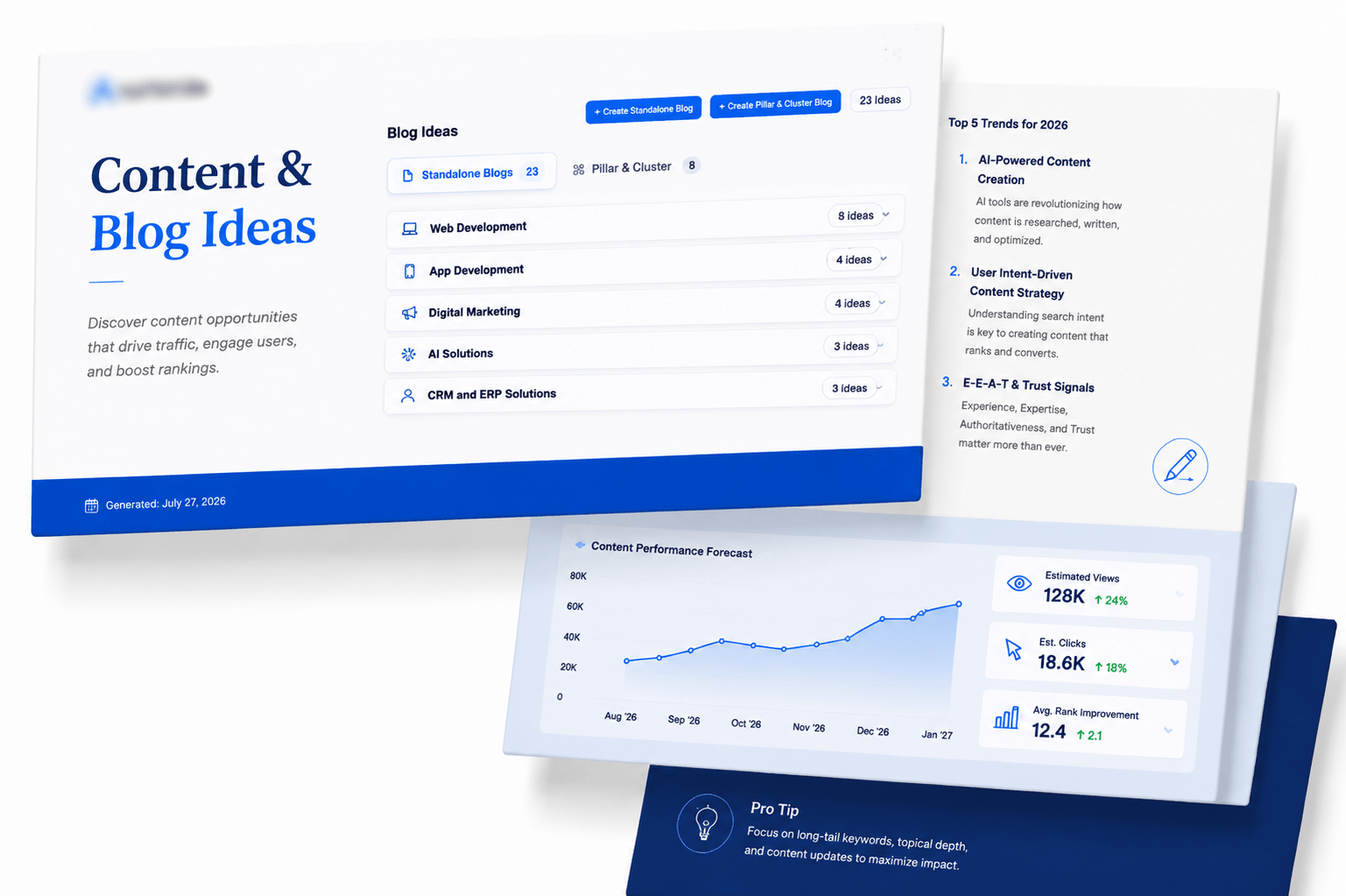
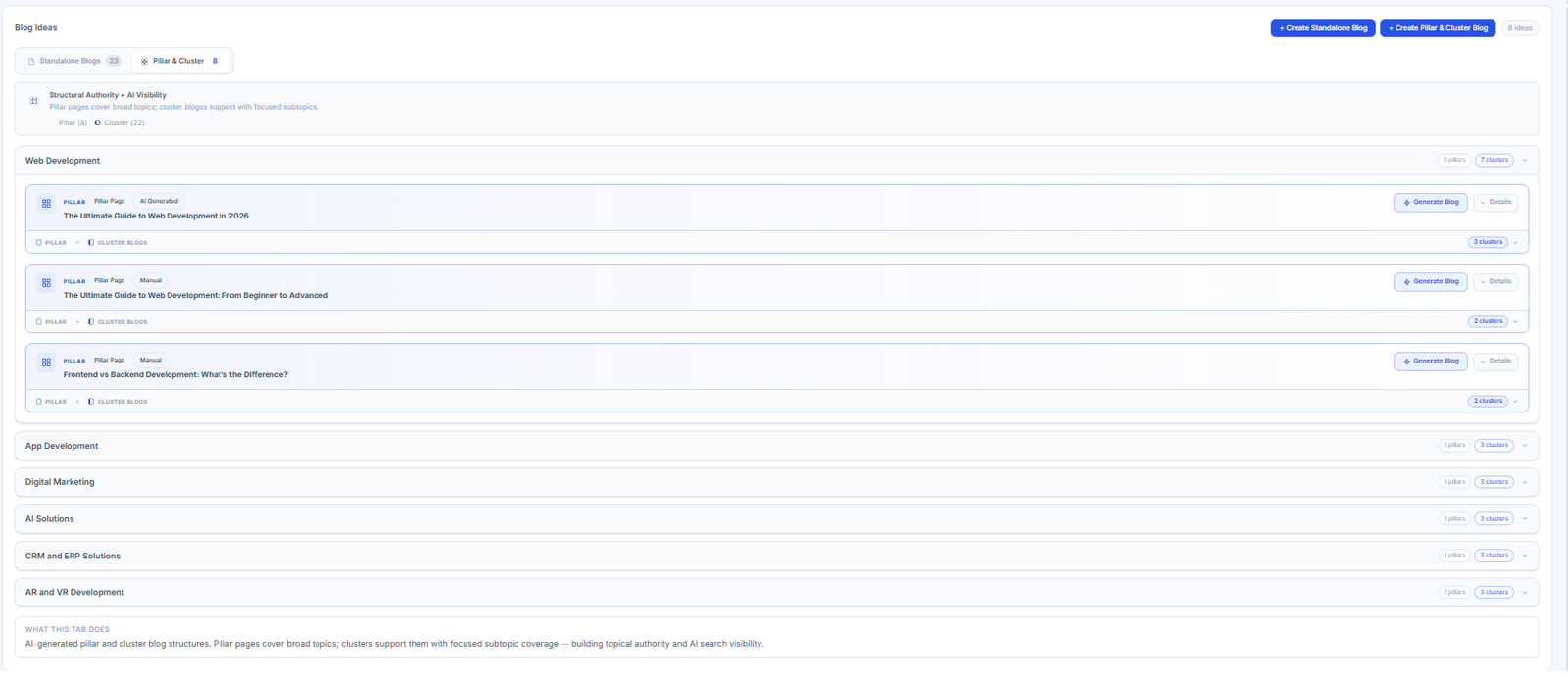
Pillar pages cover the broad topic; clusters support them with focused subtopics — grouped by your actual service lines.
Pillars and clusters, not a list of titles
Every service area gets a pillar page covering the broad topic and a set of cluster posts covering focused subtopics that link back to it. That structure is what builds topical authority, and it is what most content calendars are missing.
Each idea is marked as AI-generated or manual so you can mix automated suggestions with your own strategy, and Generate Blog turns any pillar or cluster into a full draft brief.
- Grouped by service: web development, app development, digital marketing, AI, CRM/ERP, AR/VR
- Pillar and cluster relationships made explicit, not implied
- Standalone blogs tracked separately from cluster content
- Generate a brief from any idea in one click
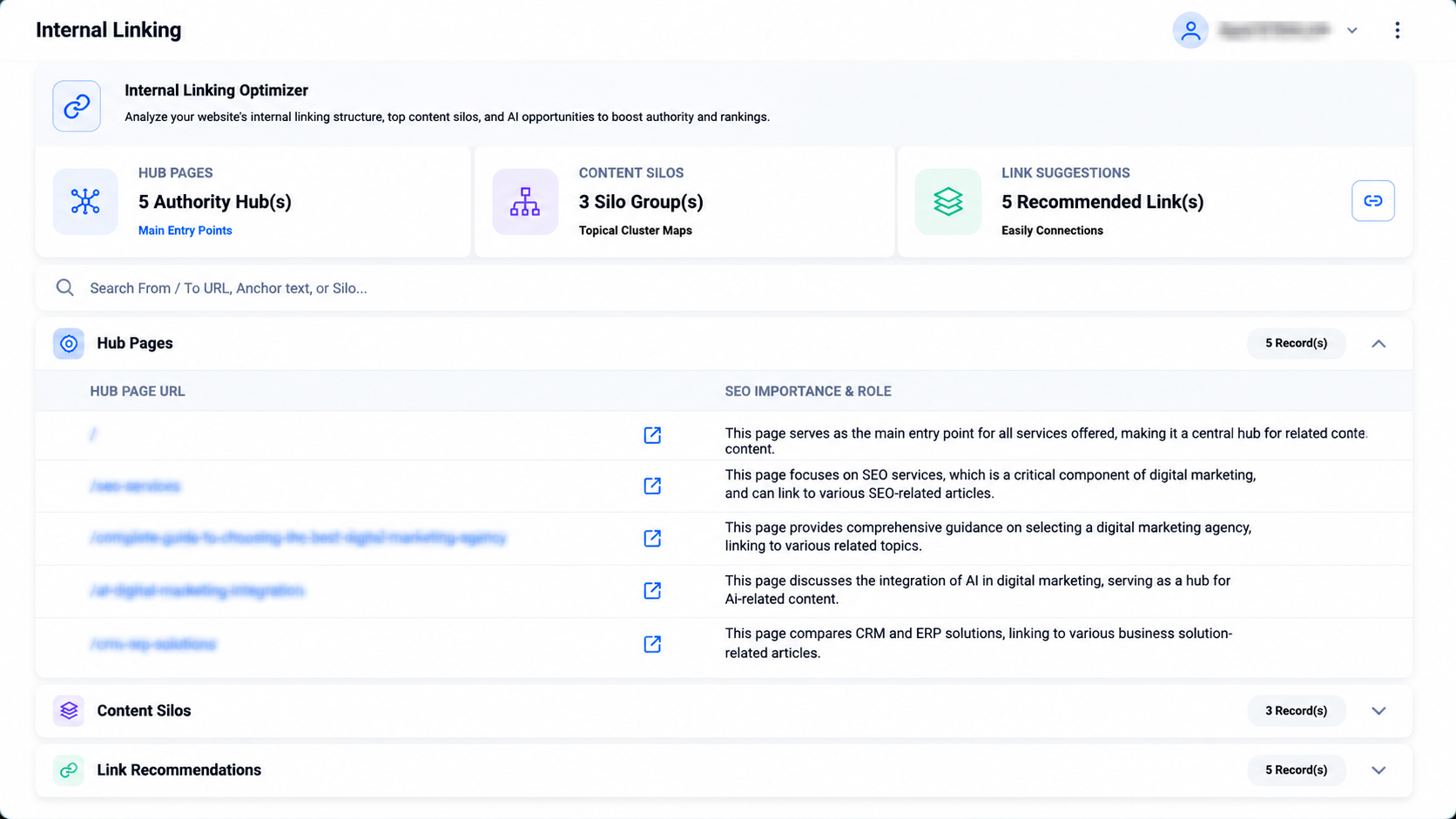
619 link suggestions, scored by relevance
The internal linking dashboard maps your whole site as a graph, then recommends specific source-page to target-page links with the anchor text to use and a relevance score for each.
Keyword clusters across the top show which topics your site actually covers in depth — and which are thin. Orphan pages, the ones nothing links to, surface here rather than staying invisible.
- 607 internal and 12 external link opportunities identified
- Anchor text suggested per link, scored for keyword relevance
- Source and target URLs both viewable before you commit
- Keyword clusters sized by page count so thin topics are obvious
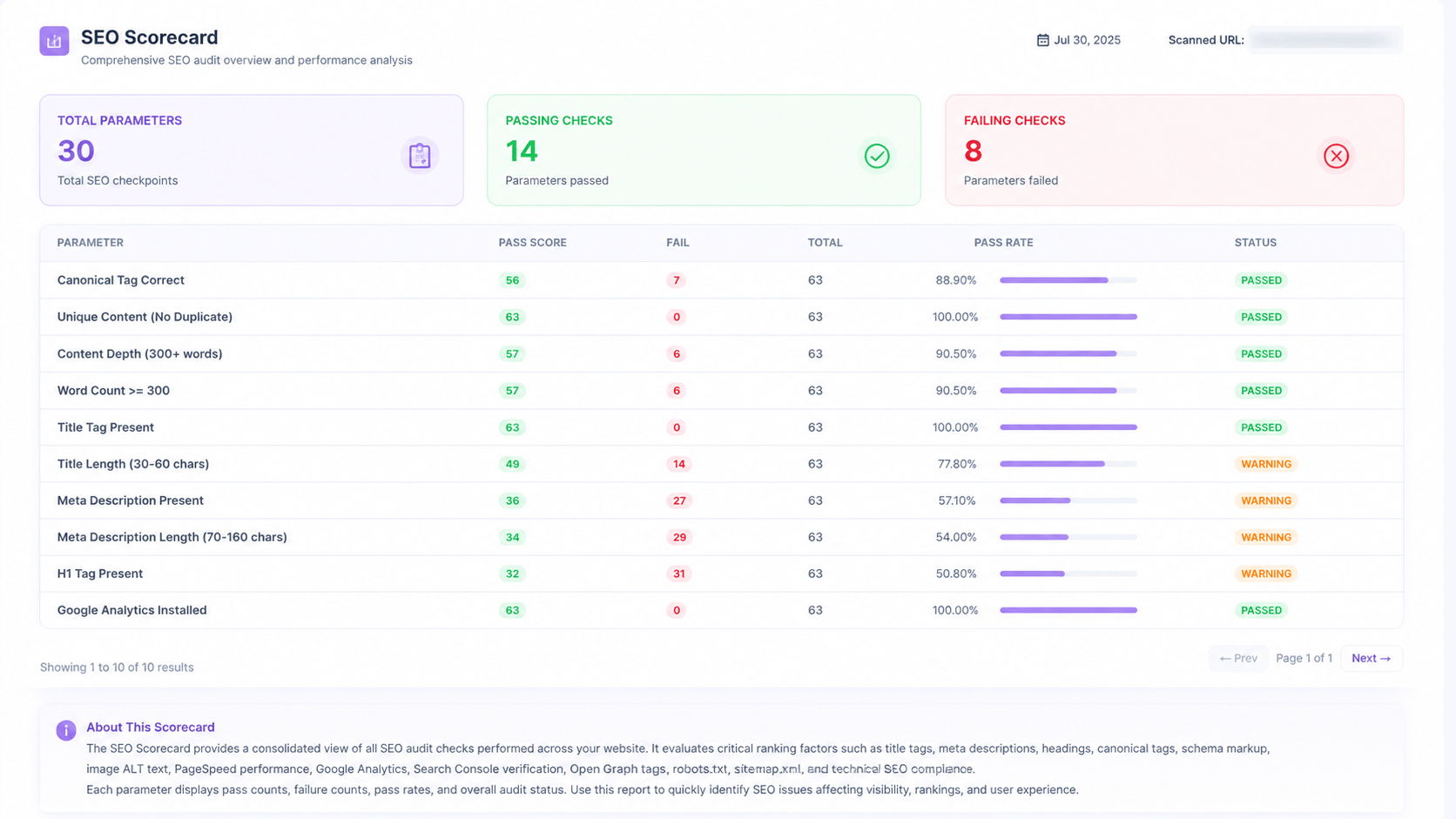
Depth, relevance and readability per page
Content analysis scores each page on semantic relevance to its target keyword, keyword density, readability and the depth of coverage relative to what is already ranking.
It is the check that catches the common failure: a page that is technically perfect, correctly linked, and simply too thin to compete.
- Semantic relevance to the mapped target keyword
- Word count and content depth benchmarked against ranking pages
- Readability scoring per URL
- Feeds the content depth row of the competitive scorecard
From idea to published page
The module covers the whole path, not just the ideation step.
Topic discovery
Data-backed topics and long-tail clusters built from what your audience is actually searching for right now.
Brief generation
Turn any pillar or cluster idea into a structured brief with target keywords, headings and the questions to answer.
Link placement
Once published, the new page appears in the link graph with specific suggestions for where to link it from.
Recommendations that come with reasoning
Content suggestions explain why, so the person writing understands the goal.
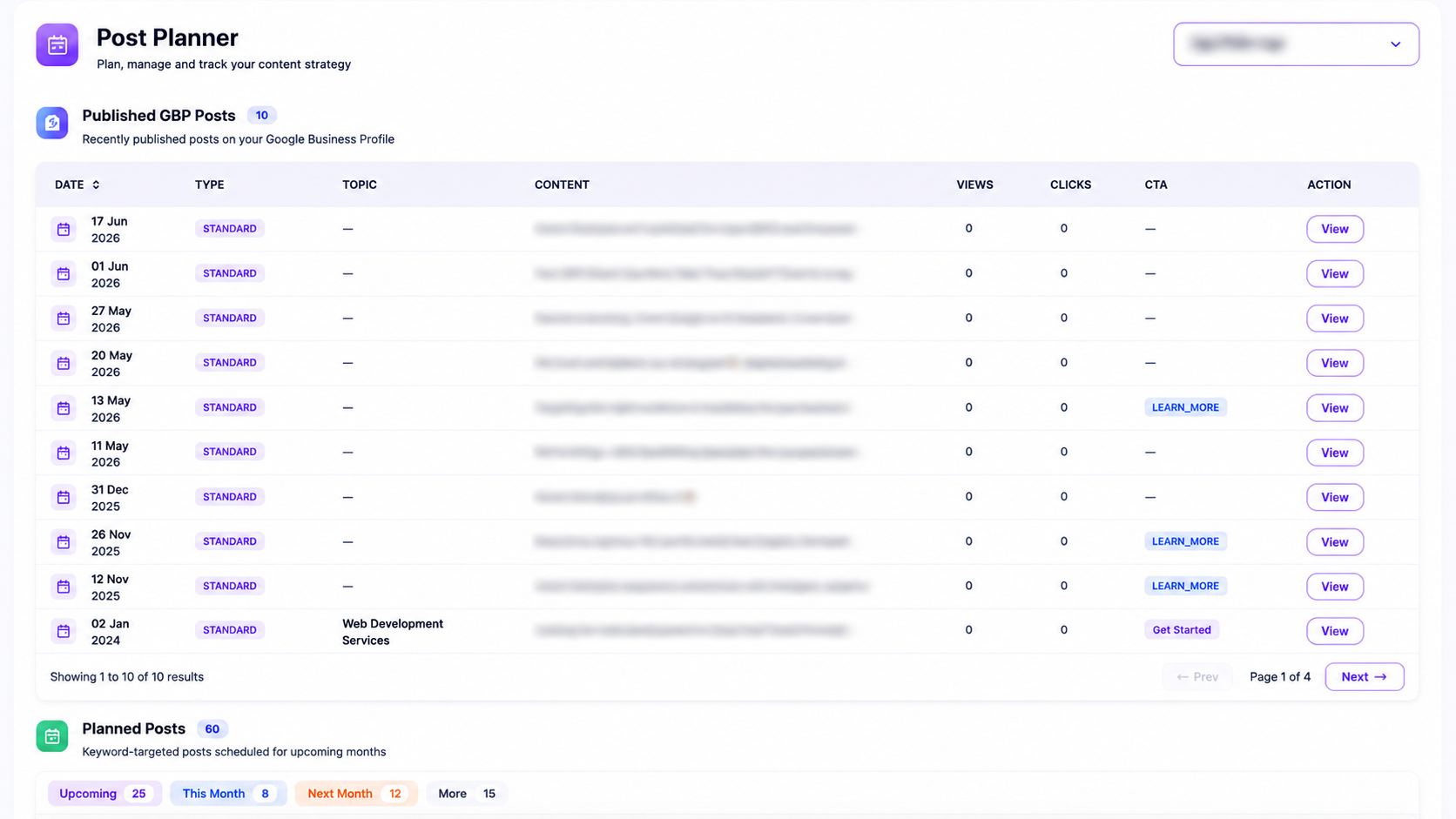
Strategy-level recommendations covering what to write, expand or consolidate.
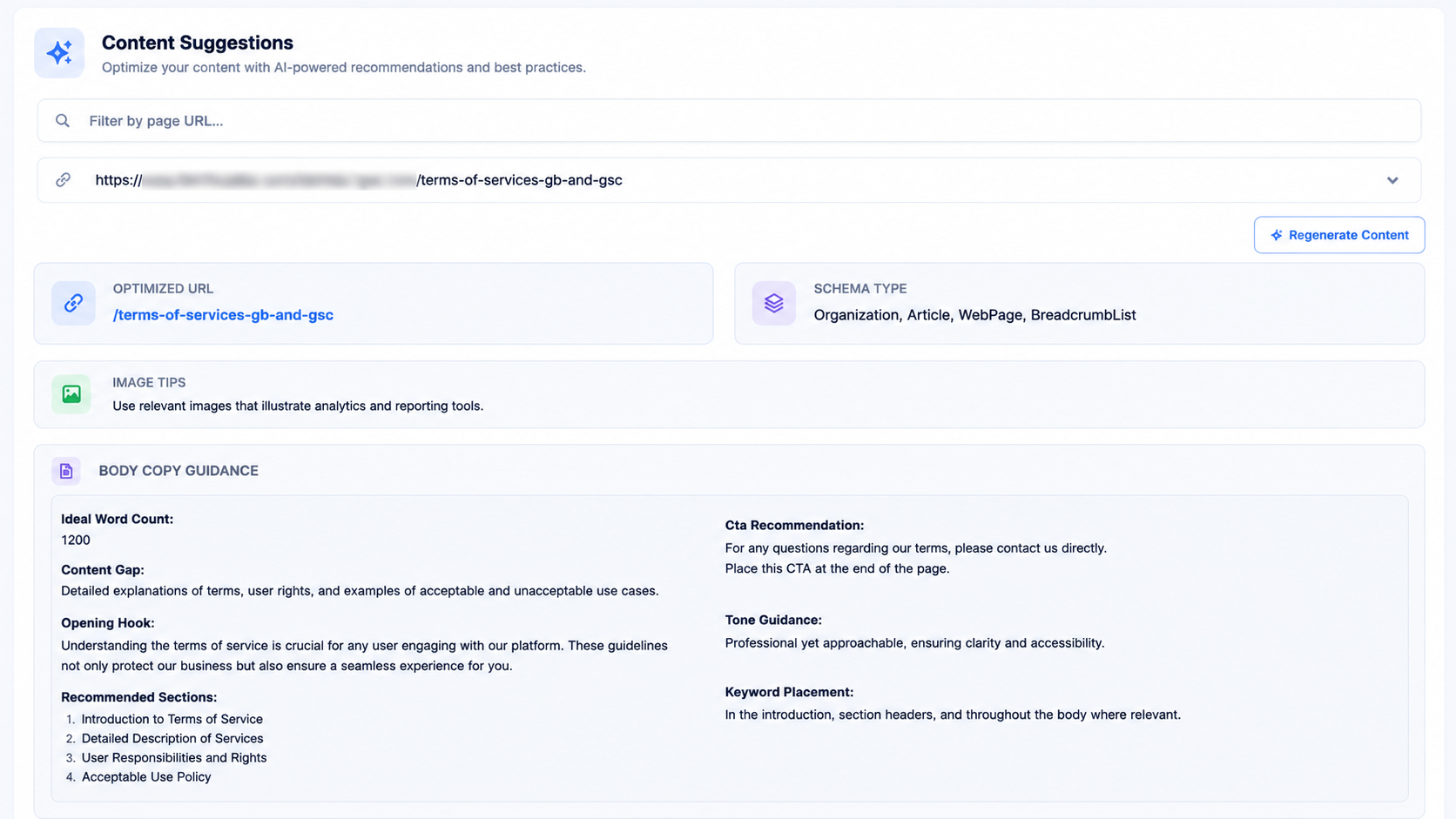
Each recommendation carries a generate action so it can move straight into production.
Questions about content & blog ideas
Build your content roadmap
Get pillar and cluster structures for every service line, plus 600+ scored internal link suggestions.