Make your content quotable.
Ranking gets you into the index. Structure gets you into the answer. The AEO score measures how ready each page is to be lifted verbatim by an AI, broken into the five dimensions that decide it.
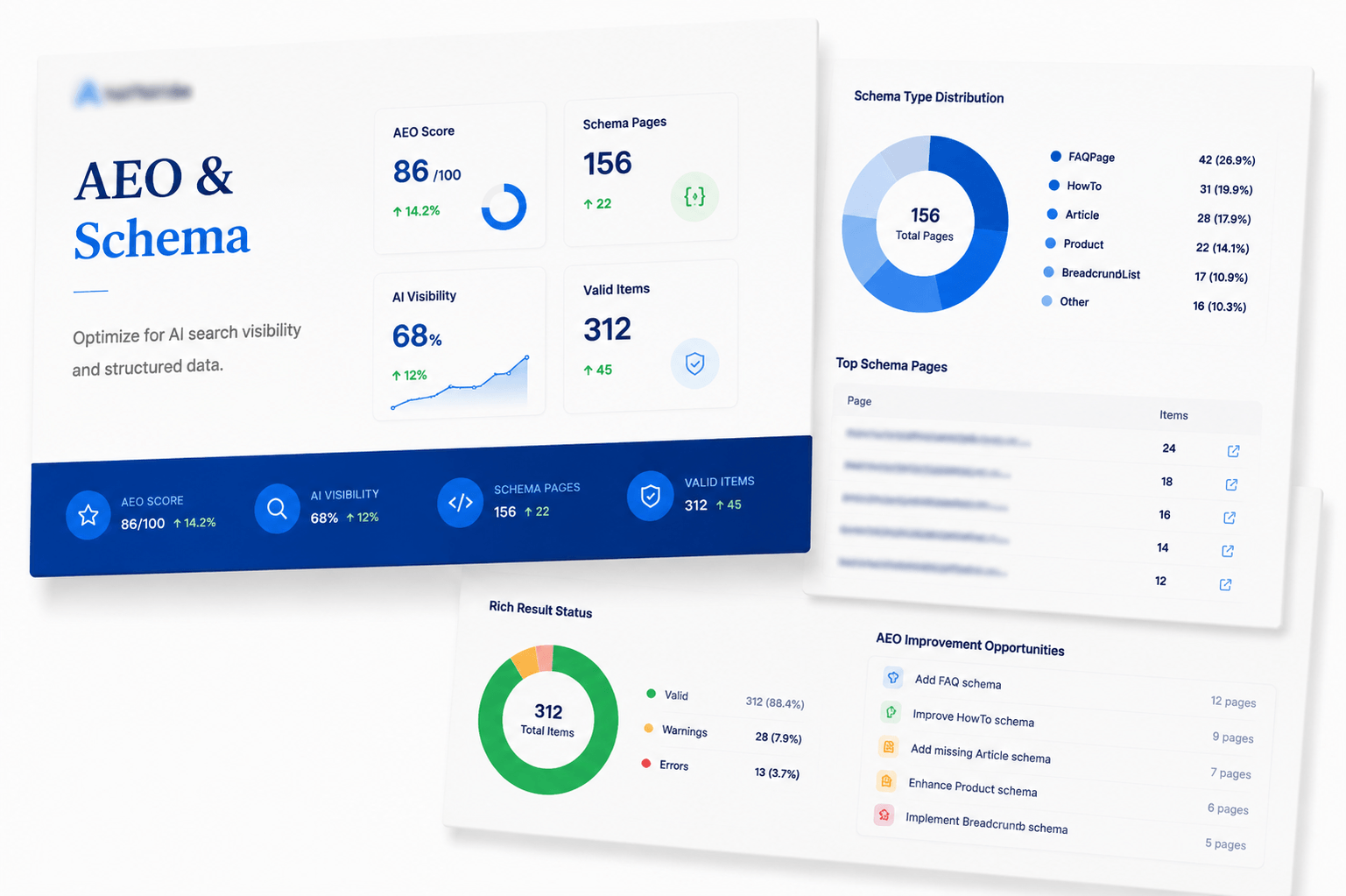
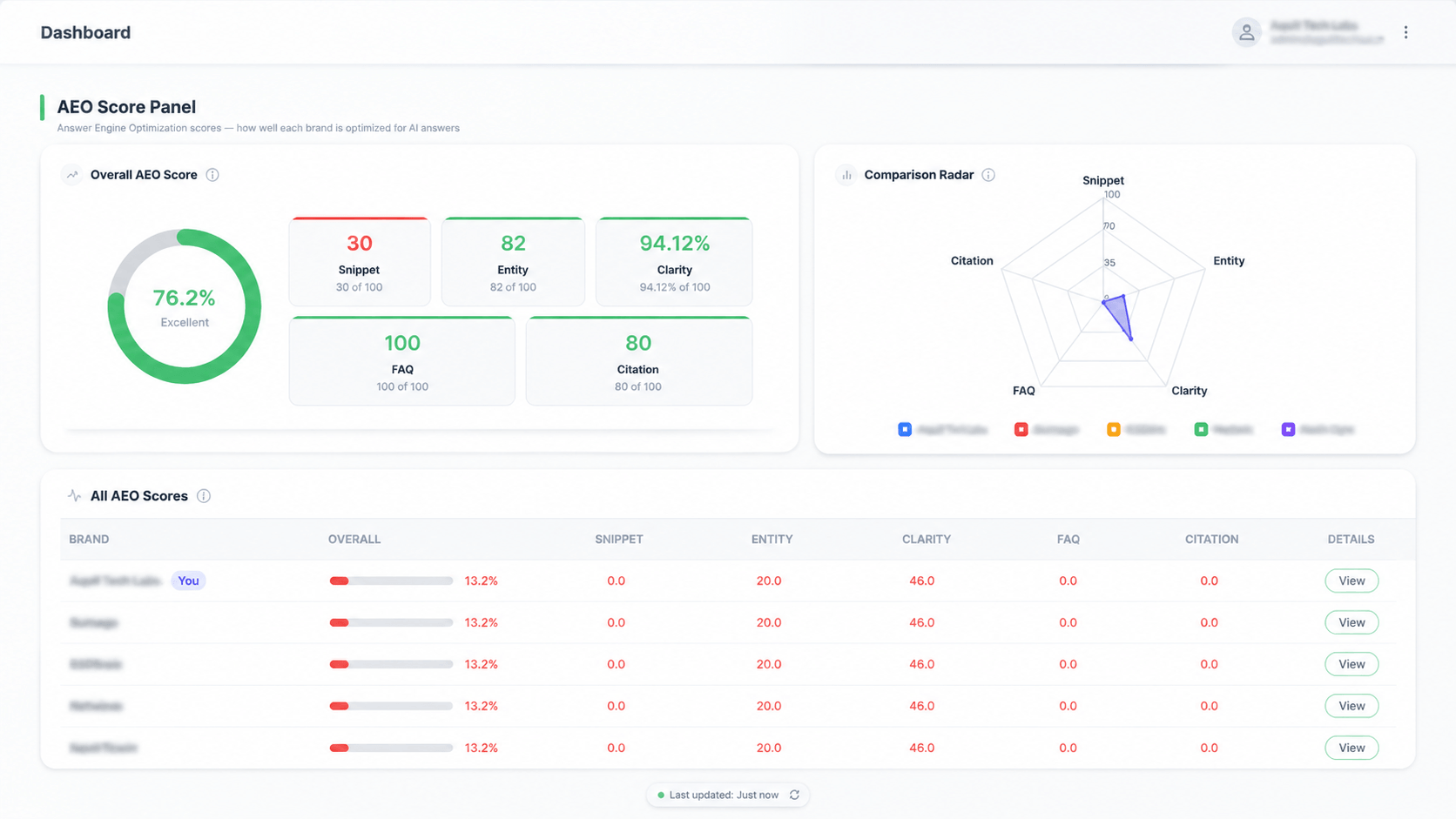
Overall AEO score decomposed into snippet, entity, clarity, FAQ and citation — with every competitor on the same radar.
Why a page does or doesn't get quoted
An AI reaching for a source needs a passage it can lift cleanly, an entity it can identify confidently, and a claim it can attribute. The AEO score breaks that into five measurable parts and shows you which one is dragging the total down.
Because every competitor is scored the same way, you can see whether your weakness is universal in your sector or specific to you.
- Snippet — is there a clean, extractable answer near the top of the page?
- Entity — can the model confidently identify who and what the page is about?
- Clarity — is the answer unambiguous enough to quote without hedging?
- FAQ — are common follow-up questions answered on the page?
- Citation — how likely is the page to be referenced as a source?
Schema validated page by page
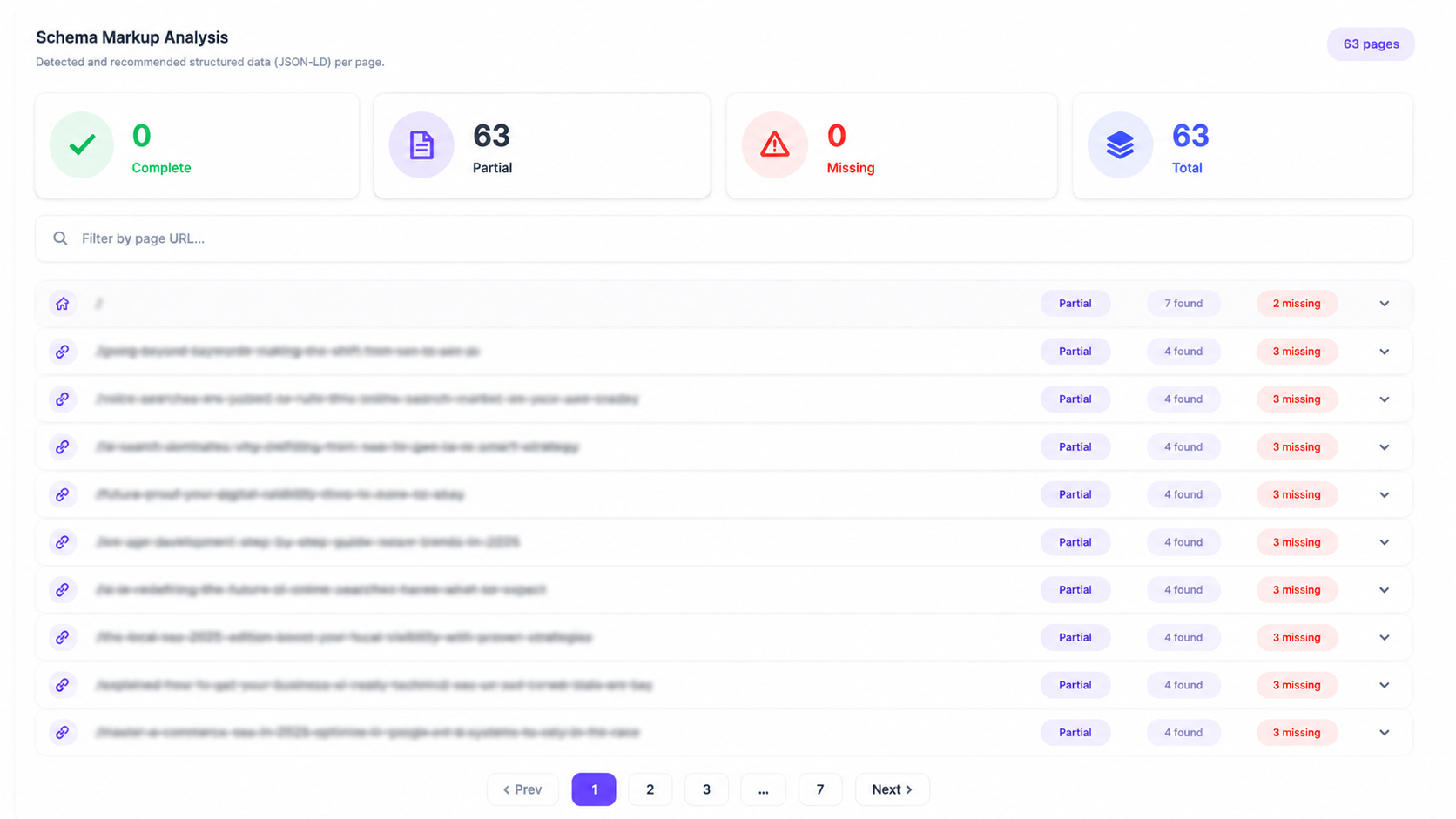
Structured data is the most direct way to tell a machine what a page means. We parse the JSON-LD on every crawled URL, report which types are present and which recommended types are missing for that page's purpose.
A page at “4 found, 3 missing” is a concrete task; a site-wide “schema needs work” is not.
- Complete / Partial / Missing status per URL with counts
- Detected types listed against recommended types
- Validation errors caught before they cost you a rich result
- Schema usage feeds directly into the AEO and competitive scorecards
The questions your page should answer
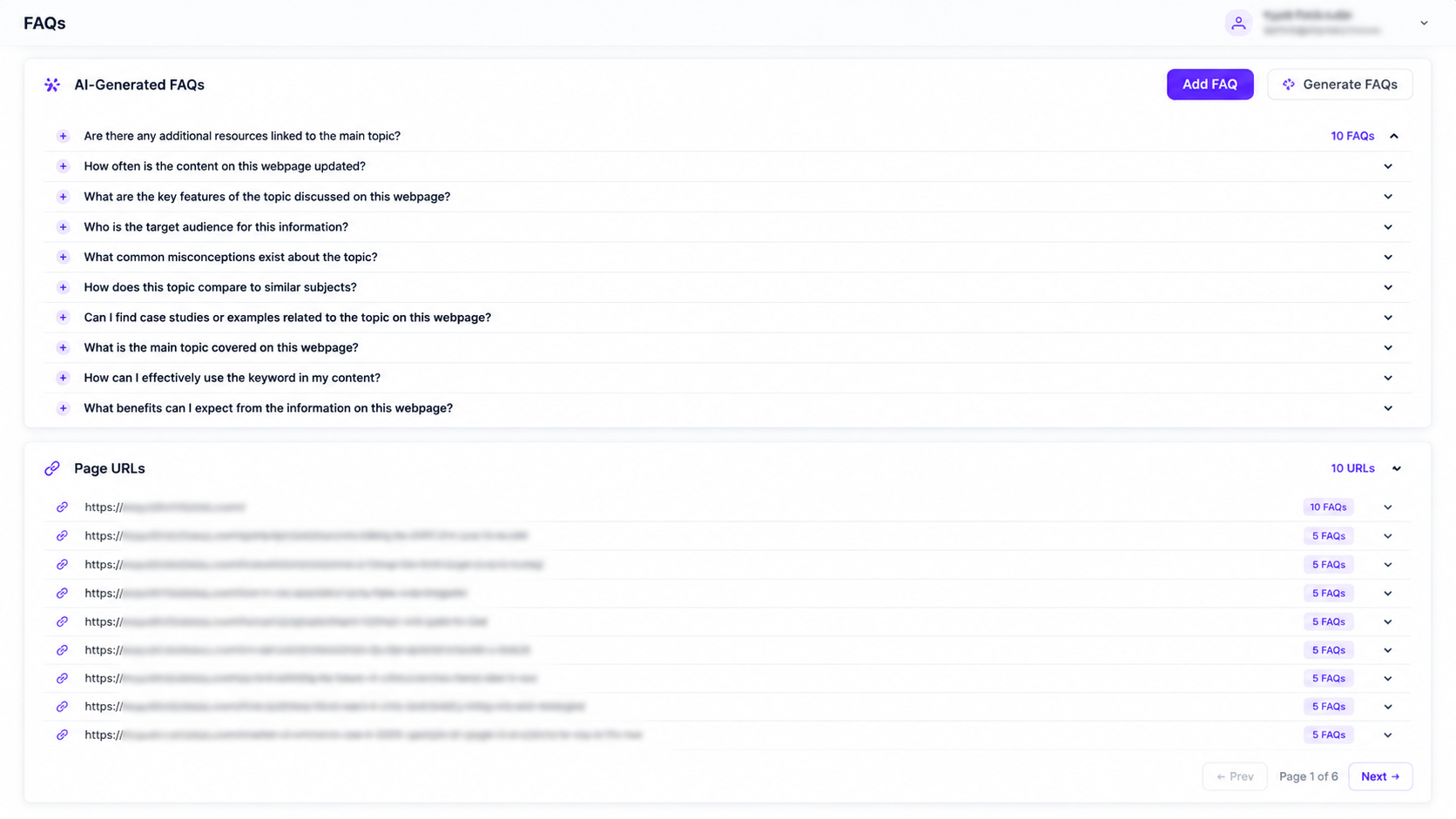
FAQ presence is one of the five AEO dimensions, and it is also the easiest to fix. The platform generates candidate questions per URL based on what the page covers and what people actually ask around that topic.
Review, edit, add your own — then publish them with FAQPage schema and watch the FAQ dimension of the AEO score move.
- Ten AI-generated FAQs for the homepage, five per content page
- Grouped by URL so you can work through the site systematically
- Add your own questions alongside the generated set
- Pairs with FAQPage JSON-LD from the schema module
How AEO differs from classic SEO
The same page can rank well and still never be quoted. These are the things that decide which.
Extractable answers
A direct answer in the first 40–60 words of a section is far more likely to be lifted than the same point buried in paragraph six.
Entity clarity
Explicit organisation, person, product and location markup removes the ambiguity that makes a model hedge or skip you.
Citation signals
Author attribution, dates, sources and consistent NAP details all raise the probability of being referenced rather than paraphrased.
Where AEO shows up elsewhere
The score is not academic — it drives the recommendations and the competitive scorecard.
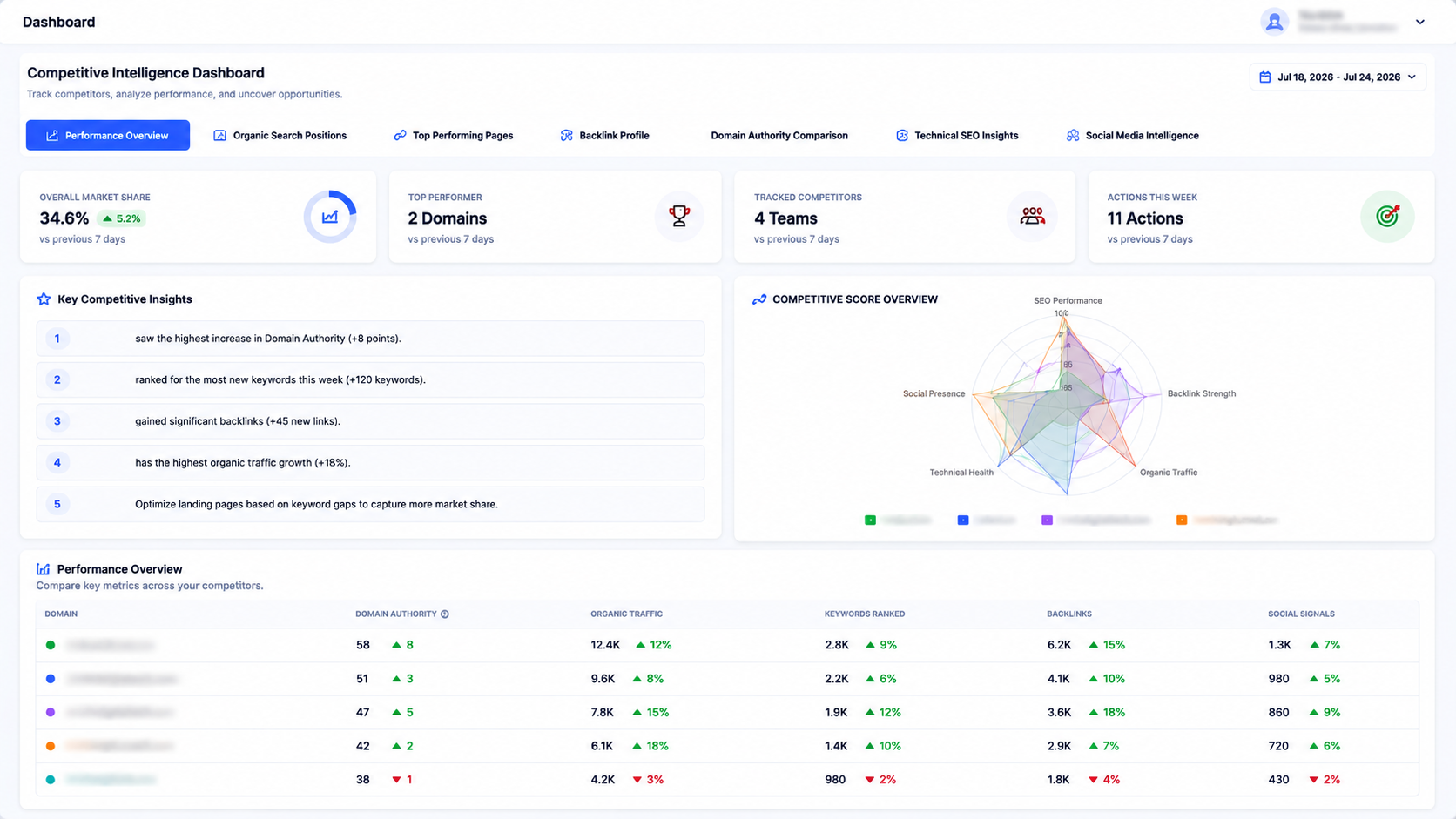
AEO, schema usage, FAQ quality and answer quality appear as scored rows against every competitor.
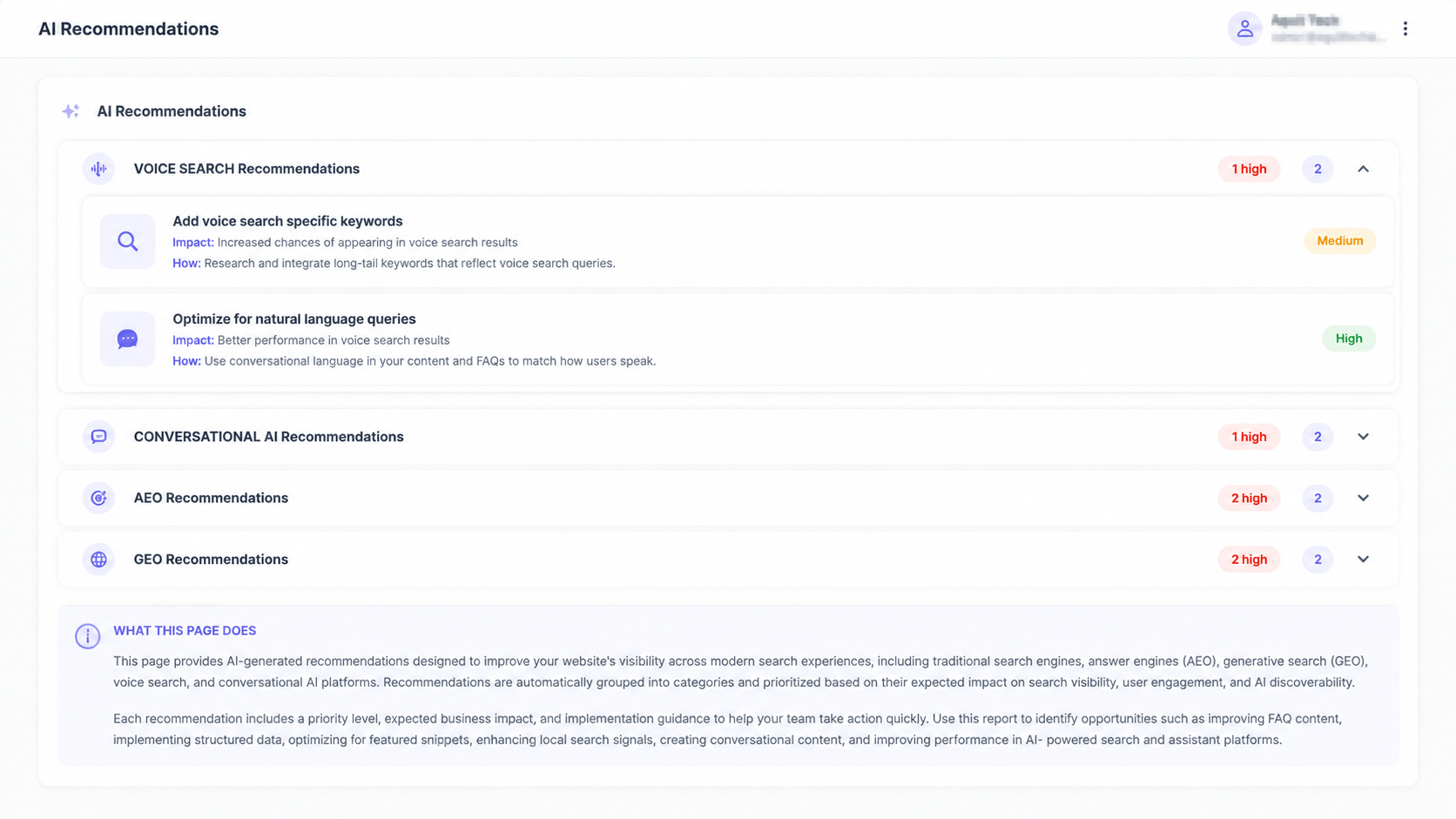
Recommendations are generated from the same signals, so fixing them moves the score.
Questions about aeo & schema
Score your answer readiness
See which of the five AEO dimensions is holding your content back — and how competitors compare.