Are AI engines recommending you?
Every day we run your prompts against seven AI engines and record whether your brand was named, what exactly was said, which competitors were suggested instead, and every source URL the model cited to reach that answer.
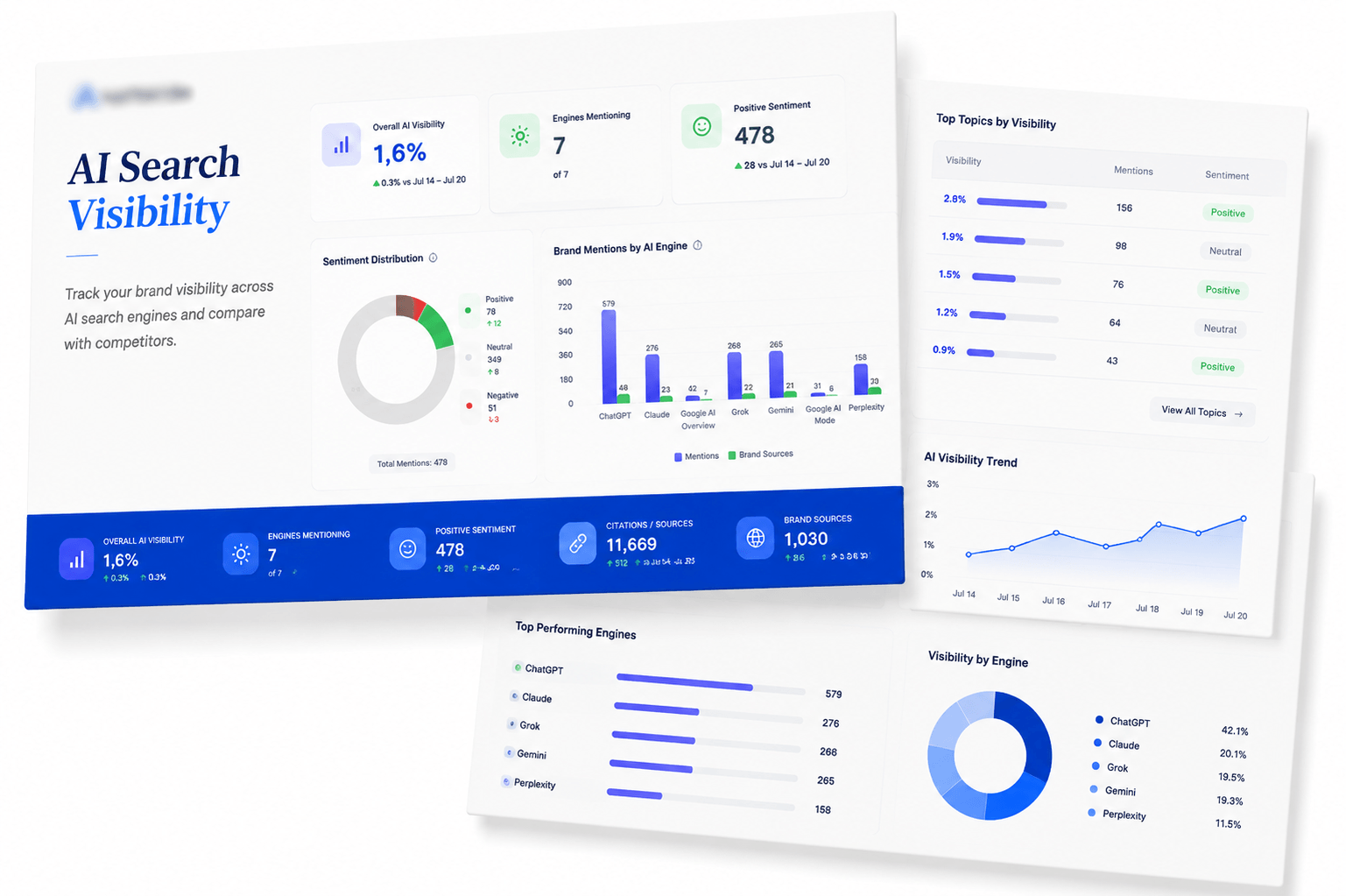
Overall visibility, how many of the seven engines mention you, sentiment split, and mentions broken down per engine.
Read the actual answer, not a score
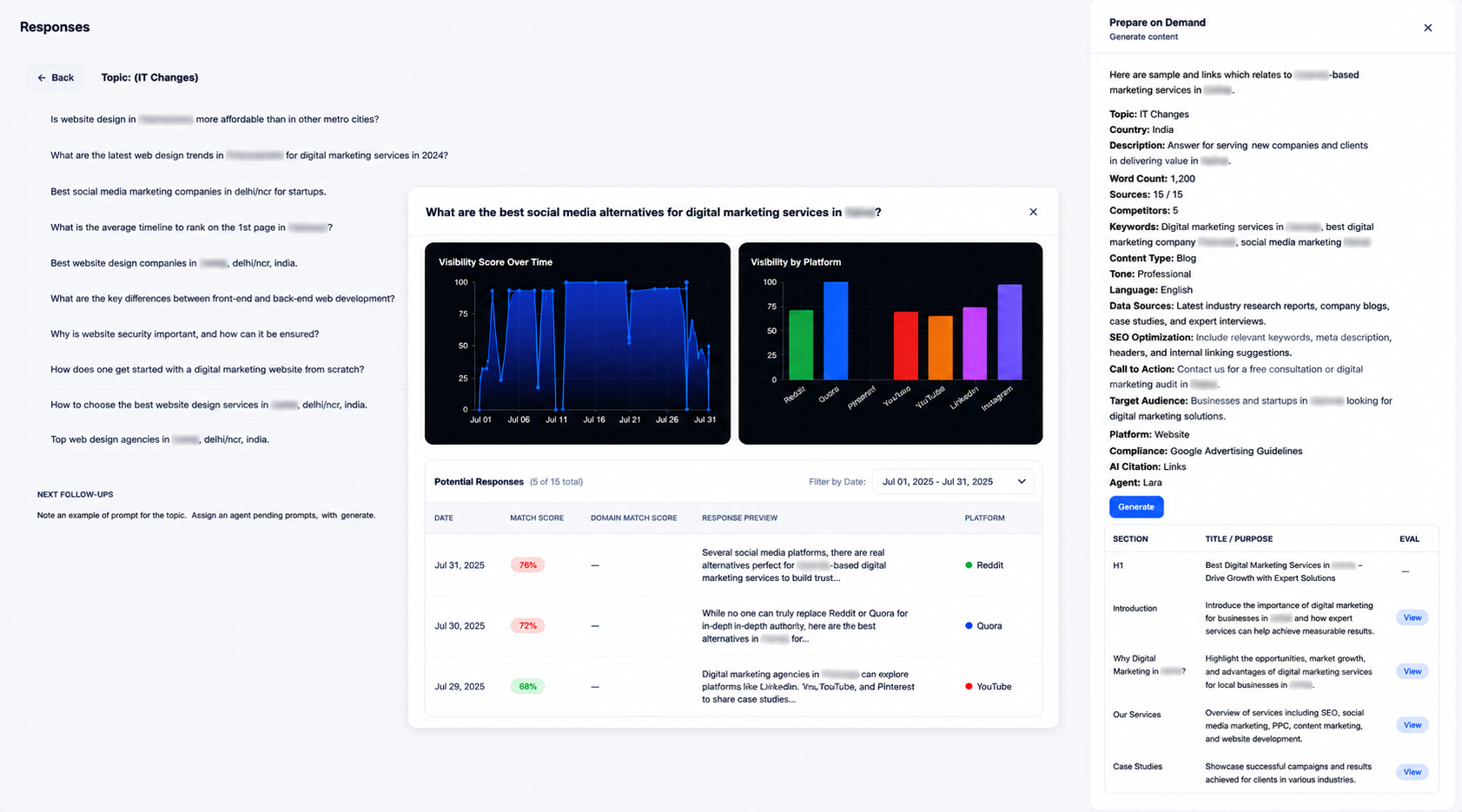
Click any prompt and you get the full response from each engine, on each date, with your brand highlighted where it appears — and the competitors named where it doesn't.
A visibility score over time chart and a visibility-by-platform bar chart sit above the response list, so you can see whether a change is universal or specific to one engine.
- Mentioned: Yes / No per response, per engine, per date
- Other mentions — which competitors were recommended instead
- Full response text stored, not summarised
- Filter by date to compare how the same prompt was answered last month
Which sources the model actually used
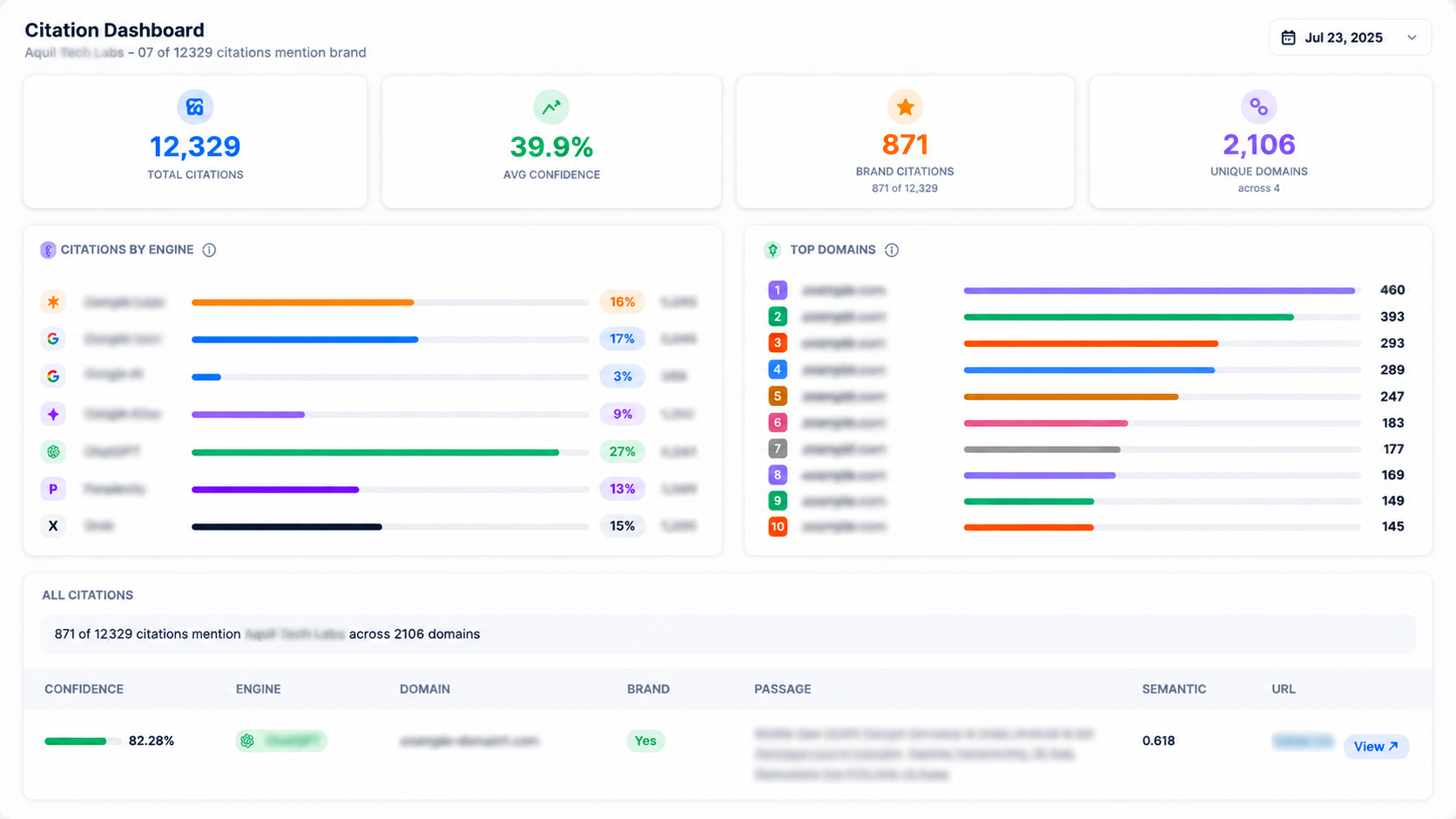
This is the part traditional SEO tools miss entirely. For every AI response we capture the source list — domain, title, passage and URL — that the model drew on.
If a directory listing or a third-party article is being cited instead of your own site, that is a concrete, fixable content gap rather than a mystery.
- Source domain, page title and the exact passage quoted
- Direct link to view each cited source
- Counts of citations that reference your brand versus those that don't
- Feeds the AEO citation score directly
66 prompts, generated from your keywords
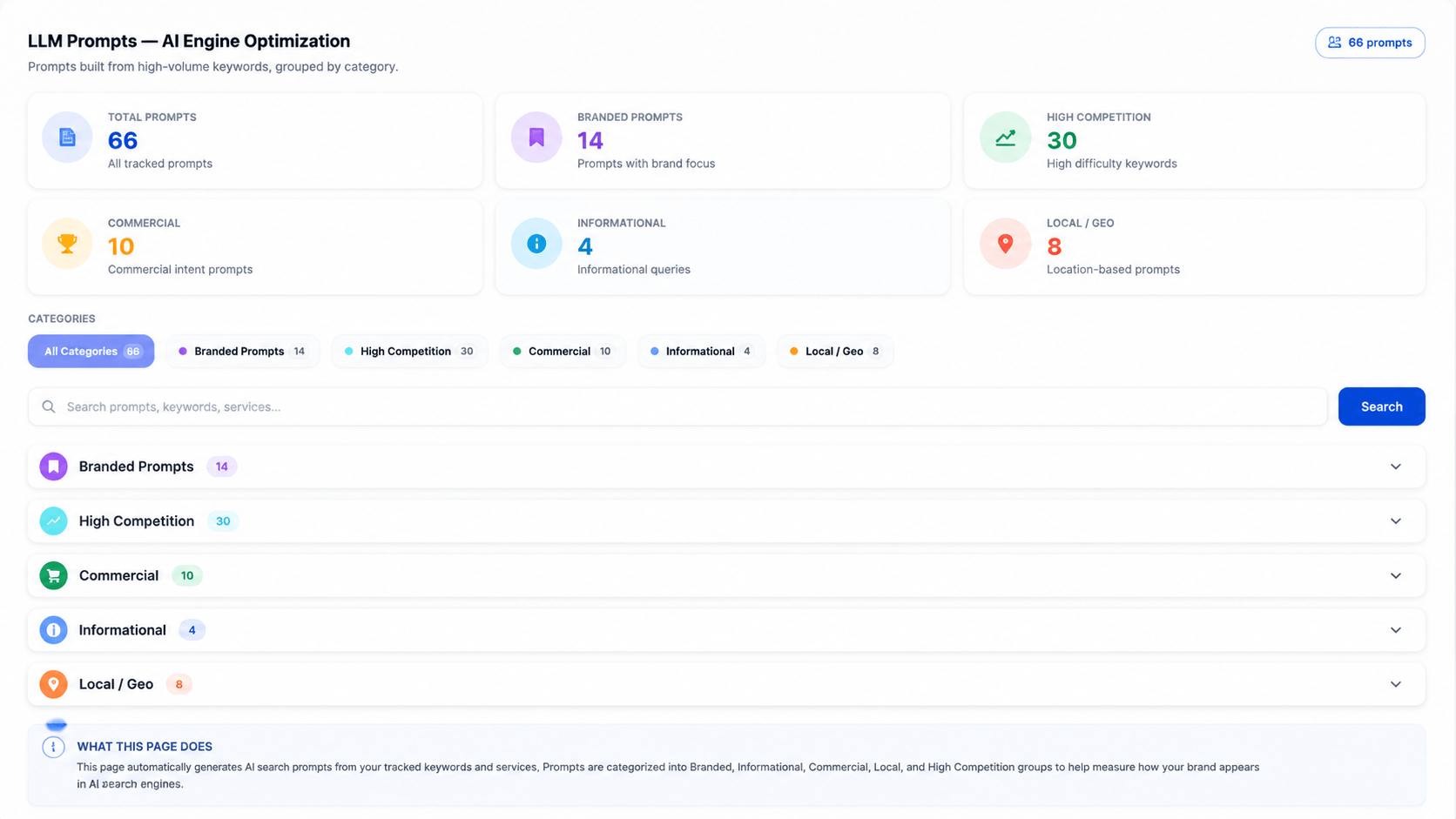
You don't have to invent the questions. The platform builds AI search prompts from your tracked keywords and services, then sorts them into Branded, High Competition, Commercial, Informational and Local / Geo groups.
Add any prompt to the visibility tracker with one click and it starts being checked daily across all seven engines.
- Branded, high-competition, commercial, informational and local categories
- Each prompt tagged with its source keyword, service and priority
- “Check AI Visibility” adds a prompt to daily monitoring instantly
- Search across the full prompt library
Being mentioned isn't always good
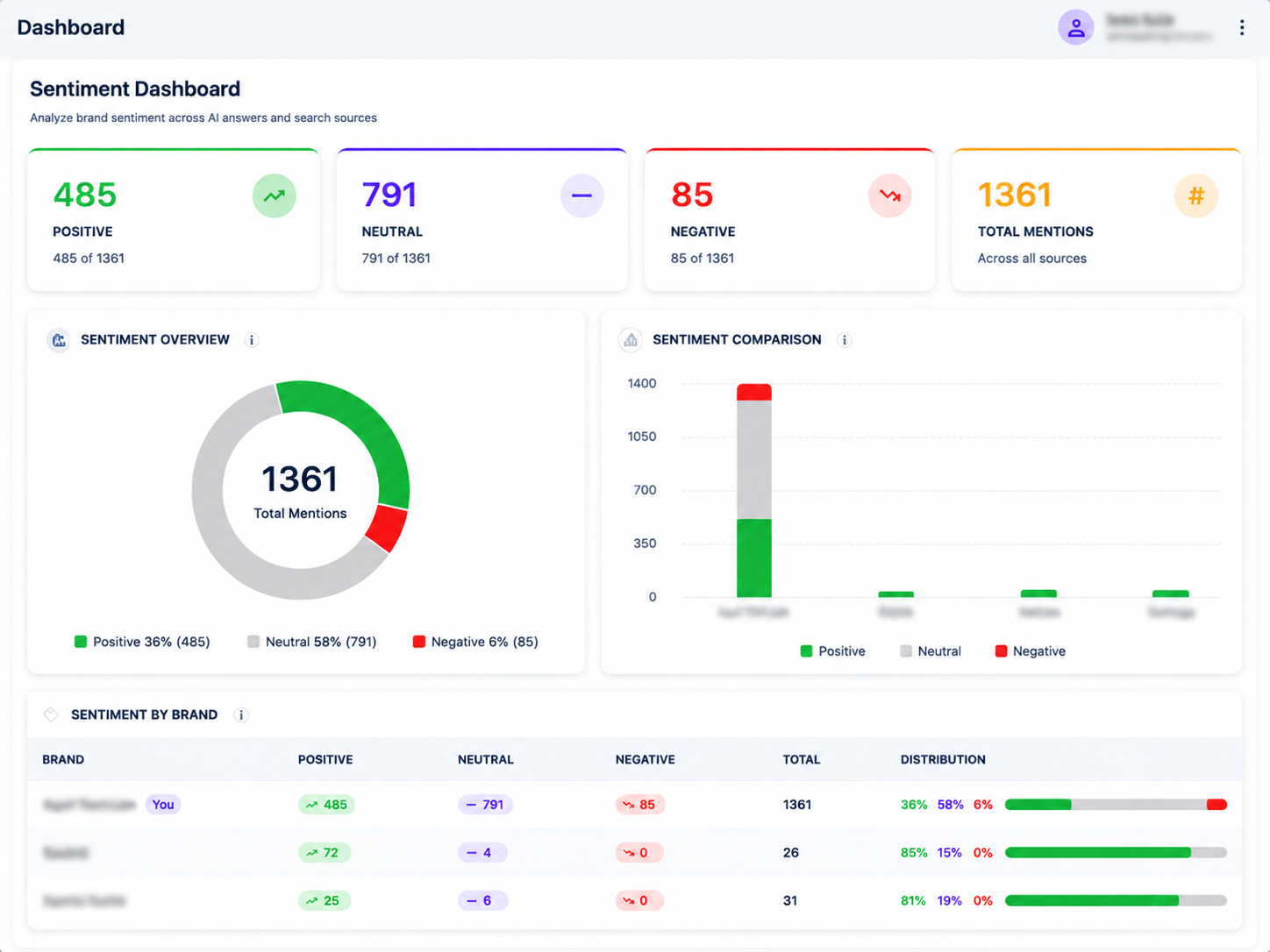
The sentiment dashboard separates positive, neutral and negative mentions and scores each one, so a spike in visibility that is actually a spike in criticism doesn't get celebrated by mistake.
Each row carries the source, the surrounding context and the prompt that produced it, so you can trace any negative sentiment back to its origin.
- Positive / neutral / negative split with an aggregate score
- Per-brand distribution bars comparing you against competitors
- Full context passage stored for every scored mention
- Filter by brand across the whole detail table
The seven engines we watch
Visibility is rarely consistent across platforms — a brand strong in Perplexity is often invisible in Gemini.
ChatGPT
Highest volume of tracked responses. Citation behaviour differs sharply from classic search results.
Google Gemini
Closest to Google's own index, so classic SEO signals carry more weight here than elsewhere.
Claude
Tends to cite fewer, higher-quality sources — strong topical authority matters more than volume.
Perplexity
Citation-heavy by design, which makes it the clearest signal of whether your pages are quotable.
Grok
Weighted toward recent and social signals; visibility here moves faster than on other engines.
Google AI Overviews & AI Mode
Tracked as two separate surfaces, because they resolve the same query differently.
Trends and topics
AI visibility is volatile — the trend view is where the signal separates from the noise.
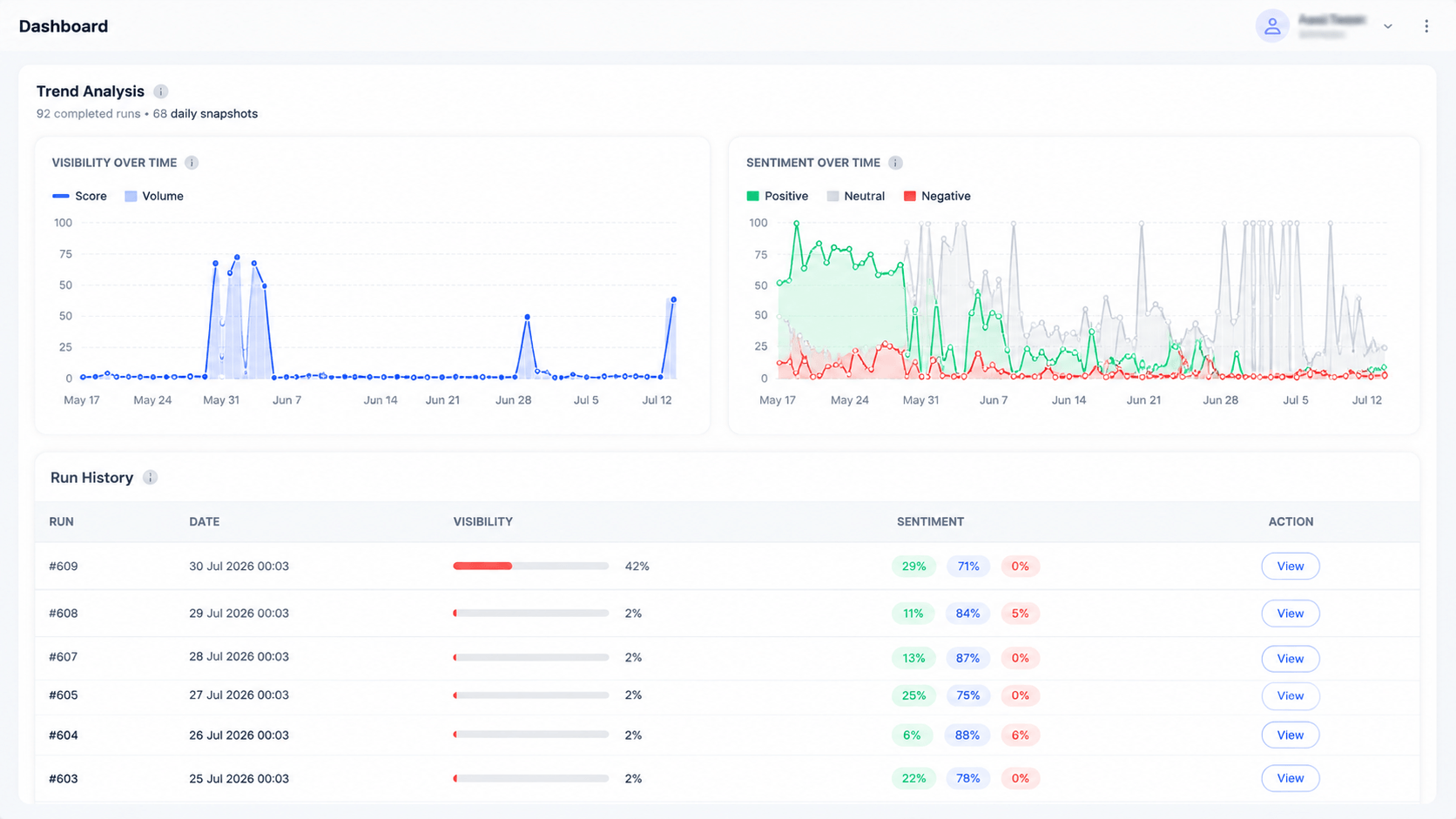
Visibility and sentiment across every completed run, with the full run history underneath.
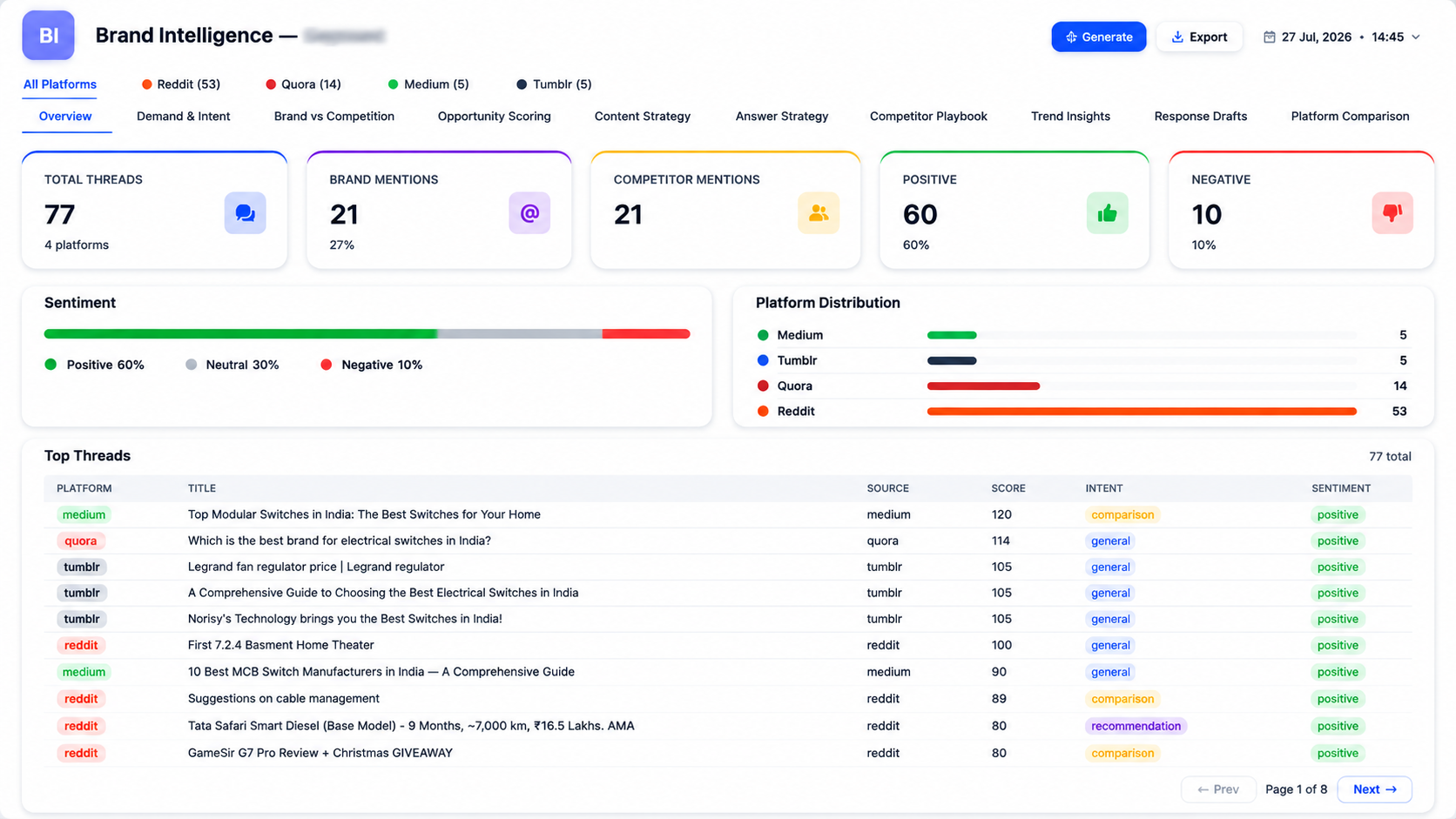
Social listening across Reddit, Quora, Medium and Tumblr — the forums AI models are trained and grounded on.
Questions about ai search visibility
Find out what AI says about you
Add your brand and see which of the seven engines recommend you — and which recommend a competitor.